|
|
The Hieromartyr Babylas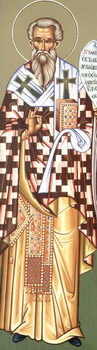 This `great and wonderful man, if one can call him a man", as St John Chrysostom expresses it, was archbishop in Antioch in the time of the wicked Emperor Numerian. This Numerian made a peace treaty with some barbarian king, who was of better character and a greater lover of peace than himself. As a sign of his sincere desire for a lasting peace, the king gave his little son to be brought up at Numerian"s court. One day, Numerian butchered the boy and offered him as a sacrifice to the idols. Still hot from his wicked shedding of innocent blood, this evildoer went to a Christian church to see what was happening there. Holy Babylas was at prayer with the people. He heard that the Emperor was coming with his retinue and intended to enter the church. Babylas stopped the service, went out in front of the church and told the Emperor that, as an idolater, he was not permitted entry to the holy church where the one, true God was worshipped. Speaking of Babylas, Chrysostom says: "Who else in the world would he fear, having with such authority withstood the Emperor? By this he taught kings not to spread their power further than the measure given them by God, and also showed the clergy how to use their authority." The shamed Emperor turned back, but planned revenge. The following day, the Emperor summoned Babylas, and began to berate him and bid him offer sacrifice to idols, which the saint, naturally, steadfastly refused to do. The Emperor then bound him with chains and threw him into prison. He also tortured three children: Urban, aged twelve, Prilidian, aged nine and Hippolinus, aged seven. Babylas was their spiritual father and teacher, and they had stayed near him out of love for him. They were the sons of a Christian woman, Christodoula, who herself suffered for Christ. The Emperor first ordered that each child be beaten with the number of blows that totalled his age, and then had them thrown into prison. Babylas, in bonds, was present at the beheading of the children, giving them courage, and then laid his honoured head under the sword. He was buried by Christians, in the chains in which he was bound at his death, in one grave with the three children. Their holy souls flew off to the company of heaven, and their wonderworking relics remained to be of support to the faithful, along with the enduring witness of their heroism in the Faith. They suffered in about 283. This `great and wonderful man, if one can call him a man", as St John Chrysostom expresses it, was archbishop in Antioch in the time of the wicked Emperor Numerian. This Numerian made a peace treaty with some barbarian king, who was of better character and a greater lover of peace than himself. As a sign of his sincere desire for a lasting peace, the king gave his little son to be brought up at Numerian"s court. One day, Numerian butchered the boy and offered him as a sacrifice to the idols. Still hot from his wicked shedding of innocent blood, this evildoer went to a Christian church to see what was happening there. Holy Babylas was at prayer with the people. He heard that the Emperor was coming with his retinue and intended to enter the church. Babylas stopped the service, went out in front of the church and told the Emperor that, as an idolater, he was not permitted entry to the holy church where the one, true God was worshipped. Speaking of Babylas, Chrysostom says: "Who else in the world would he fear, having with such authority withstood the Emperor? By this he taught kings not to spread their power further than the measure given them by God, and also showed the clergy how to use their authority." The shamed Emperor turned back, but planned revenge. The following day, the Emperor summoned Babylas, and began to berate him and bid him offer sacrifice to idols, which the saint, naturally, steadfastly refused to do. The Emperor then bound him with chains and threw him into prison. He also tortured three children: Urban, aged twelve, Prilidian, aged nine and Hippolinus, aged seven. Babylas was their spiritual father and teacher, and they had stayed near him out of love for him. They were the sons of a Christian woman, Christodoula, who herself suffered for Christ. The Emperor first ordered that each child be beaten with the number of blows that totalled his age, and then had them thrown into prison. Babylas, in bonds, was present at the beheading of the children, giving them courage, and then laid his honoured head under the sword. He was buried by Christians, in the chains in which he was bound at his death, in one grave with the three children. Their holy souls flew off to the company of heaven, and their wonderworking relics remained to be of support to the faithful, along with the enduring witness of their heroism in the Faith. They suffered in about 283.The Holy Prophet Moses, who beheld God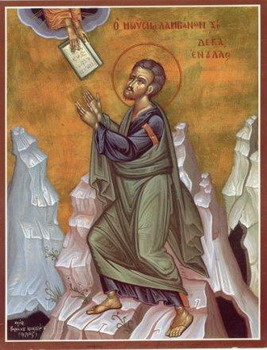 A great leader and lawgiver of Israel, he was born in Egypt in about 1550 B.C. He spent forty years in Egypt at Pharaoh"s court, forty years as a shepherd in meditation on God and the world, and his last forty years he led the people through the wilderness to the Promised Land, which he saw but did not enter, having at one time sinned against God (Numbers 20:12). He entered into rest at the age of a hundred and twenty. He appeared from the other world on Tabor at the Lord"s Transfiguration, and, according to the testimony of St John of the Ladder, appeared to the monks of Sinai. A great leader and lawgiver of Israel, he was born in Egypt in about 1550 B.C. He spent forty years in Egypt at Pharaoh"s court, forty years as a shepherd in meditation on God and the world, and his last forty years he led the people through the wilderness to the Promised Land, which he saw but did not enter, having at one time sinned against God (Numbers 20:12). He entered into rest at the age of a hundred and twenty. He appeared from the other world on Tabor at the Lord"s Transfiguration, and, according to the testimony of St John of the Ladder, appeared to the monks of Sinai.The Holy Martyrs Mareellus and CassianThe Emperor Maximian Hercules (285-305) ordered that all the army offer sacrifice to idols. Marcellus was a soldier at this time, and Cassian a notary. Marcellus, as a Christian, said: "If a soldier"s calling is tied up with the offering of sacrifice to idols, I cannot be a soldier", and he took off his military belt and weapons and threw them from him. He was immediately condemned to death. Cassian had to put this death-sentence into writing, and he refused to do so. They were beheaded together, and their souls went to the heavenly Kingdom. Martyrs Theodore, Mianus (Ammianus), Julian, Kion (Oceanus), and Centurionus of Nicomedia (305-311)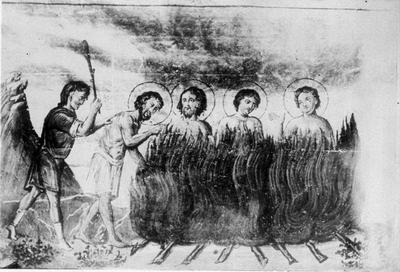 The Holy Martyrs Theodore, Mianos, Julian and Kion lived during the reign of Maximian (305-311) and were from the village of Quandababa (near Nicomedia). For confessing faith in Christ they were arrested and given over to torture. At first their bodies were torn at with sharp iron hooks, and then they were locked into an hot and flooded bath-house. And so that they should not escape, the doors were locked and sealed with the imperial signet-ring. But an Angel of the Lord freed them. Soldiers again arrested the martyrs and led them beyond the city for execution. The saints at their request were given time for prayer, and then they gave up their souls to the Lord. Their bodies were hacked into pieces and thrown into a fire. The Holy Martyrs Theodore, Mianos, Julian and Kion lived during the reign of Maximian (305-311) and were from the village of Quandababa (near Nicomedia). For confessing faith in Christ they were arrested and given over to torture. At first their bodies were torn at with sharp iron hooks, and then they were locked into an hot and flooded bath-house. And so that they should not escape, the doors were locked and sealed with the imperial signet-ring. But an Angel of the Lord freed them. Soldiers again arrested the martyrs and led them beyond the city for execution. The saints at their request were given time for prayer, and then they gave up their souls to the Lord. Their bodies were hacked into pieces and thrown into a fire.Martyr Babylas of Nicomedia, and with him 84 children (4th c.)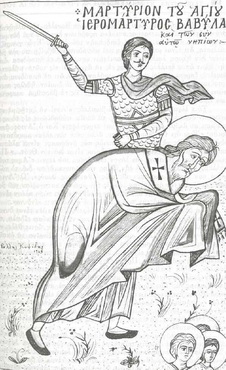 The Martyr Babyla, and with him his 84 Students, suffered in the city of Nicomedia for their confessing of Christianity during the reign of the emperor Maximian (284-305). The emperor, then in Nicomedia, renewed the persecution against Christians. Just as with many another amongst believers, denunciation was made to Maximian regarding Babyla, that he was instructing children in Christian piety. When the elder Babyla was brought before the emperor, and after his confession of faith in the True God, he was given over to many torments... The Martyr Babyla, and with him his 84 Students, suffered in the city of Nicomedia for their confessing of Christianity during the reign of the emperor Maximian (284-305). The emperor, then in Nicomedia, renewed the persecution against Christians. Just as with many another amongst believers, denunciation was made to Maximian regarding Babyla, that he was instructing children in Christian piety. When the elder Babyla was brought before the emperor, and after his confession of faith in the True God, he was given over to many torments...Martyr Hermione, daughter of Apostle Philip the Deacon (117)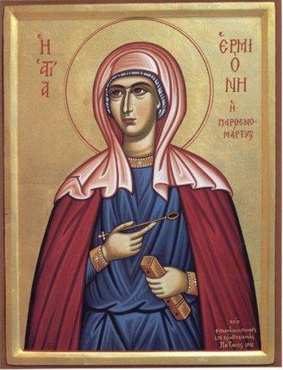 The Holy Martyress Hermionia was a daughter of the holy Apostle Philip (Comm. 14 November). Wanting to see the holy Apostle John the Theologian, Hermionia with her sister Euthykhia set off to Asia (Asia Minor) in search of the saint, but during the time of their journey they learned the saint had died. Continuing on, the sisters met up with a disciple of Saint Paul named Petronias, and copying him in everything, they became his disciples. Saint Hermionia, having mastered the healing arts, rendered help to many a Christian and by the power of Christ she healed the sick... The Holy Martyress Hermionia was a daughter of the holy Apostle Philip (Comm. 14 November). Wanting to see the holy Apostle John the Theologian, Hermionia with her sister Euthykhia set off to Asia (Asia Minor) in search of the saint, but during the time of their journey they learned the saint had died. Continuing on, the sisters met up with a disciple of Saint Paul named Petronias, and copying him in everything, they became his disciples. Saint Hermionia, having mastered the healing arts, rendered help to many a Christian and by the power of Christ she healed the sick...St. Anthimus the Blind, new ascetic of Cephalonia (1782)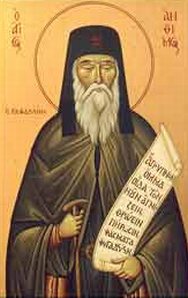 He was born on the island of Kephalonia in 1727, with the name Athanasios Kourouklis. At the age of seven he became blind as a result of smallpox. His devout mother prayed for his healing, and asked her priest to serve forty Ligurgies for her son's healing. At the fortieth Liturgy, as the priest said 'In the fear of God and with faith and love draw near,' Athanasius cried out that he could see the priest's vestments and chalice... He was born on the island of Kephalonia in 1727, with the name Athanasios Kourouklis. At the age of seven he became blind as a result of smallpox. His devout mother prayed for his healing, and asked her priest to serve forty Ligurgies for her son's healing. At the fortieth Liturgy, as the priest said 'In the fear of God and with faith and love draw near,' Athanasius cried out that he could see the priest's vestments and chalice...Martyrs Theotimus and Theodulus the executionersMartyrs Thathuil and Bebaia of Edessa (2nd c.)New Hieromartyr Peter, metropolitan of Dabro-Bosnia (1941)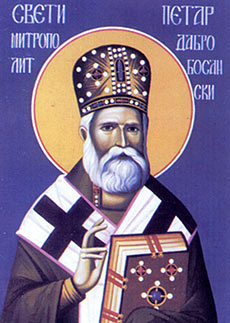 Martyrs Urban, Prilidian, and Epolonius, and their mother Christodula (251)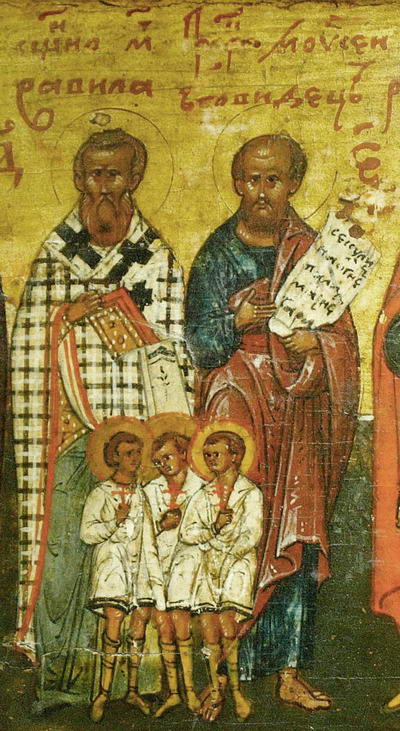 See Martyr Babylas of Nicomedia See Martyr Babylas of NicomediaMartyrs Ammonias and DonatosSee Martyr Babylas of Nicomedia Venerable Petronius of Egypt (346)Disciple of St. Pachomius the Great. Martyr Charitina of AmisusUncovering of the relics (1911) of St. Ioasaph, bishop of Belgorod (1754)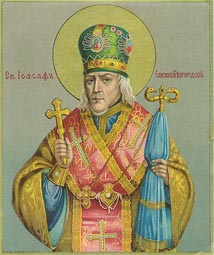 Sainted Joasaph was born at Proluka, in the former Poltava governance, on 8 September 1705, the feastday of the Nativity of the MostHoly Mother of God. At Baptism he was named Joakim. He was descended from the old and venerable Little Russian (Ukrainian) lineage of the Gorlenkovi. In 1712 his father enrolled the 7 year old Joakim in the Kiev Spiritual Academy. Within the walls of the academy he felt the attraction towards monastic life... Sainted Joasaph was born at Proluka, in the former Poltava governance, on 8 September 1705, the feastday of the Nativity of the MostHoly Mother of God. At Baptism he was named Joakim. He was descended from the old and venerable Little Russian (Ukrainian) lineage of the Gorlenkovi. In 1712 his father enrolled the 7 year old Joakim in the Kiev Spiritual Academy. Within the walls of the academy he felt the attraction towards monastic life... |
||||||||||||||||||||||||||||||||||||||||||||||||||||
If You liked our Work and effort then please consider to make a kind donation:

|
||||||||||||||||||||||||||||||||||||||||||||||||||||||
If you like our project and you are satisfied with our work and effort, please consider making a donation that would help us to survive on the Internet and in further development of the project.
There are many other ways to help...