|
|
The Hieromartyr Anthimus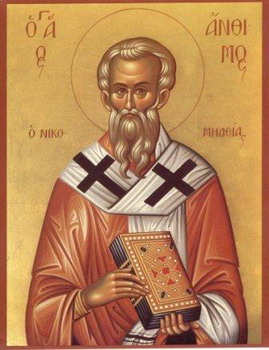 Born in Nicomedia, he was brought up from childhood as a true Christian. "His body was mortified, his spirit humble; jealousy was uprooted, anger tamed, sloth banished. ... he had love for all and was at peace with all, had a good understanding with all, was filled with zeal for the glory of God and was open to all." It is not surprising that a man of such virtues was made a bishop. St Anthimus worked as a bishop in Nicomedia at the time of a harsh persecution of Christians under the two wicked Emperors Diocletian and Maximian. Streams of Christian blood were spilled, especially in Nicomedia. One year, on the feast of the Nativity of Christ, twenty thousand martyrs were burned in one church (see Dec. 28th). This happened during Anthimus"s episcopate. The persecution did not end with this, but continued, and many Christians were thrown into prison and kept there for torture and death. St Anthimus withdrew to a village, Omana, not to escape death but to be able thence to strengthen his flock in the path of martyrdom, that none should draw back through fear. One of his letters to the Christians in prison was seized and taken to the Emperor Maximian. The Emperor sent twenty soldiers to find Anthimus and take him. The grey-beard, discerning this, went out to meet the soldiers, brought them into his house as his guests and only then revealed that he was Anthimus. The soldiers, amazed at his kindness, urged him to hide, and said that they would tell the Emperor that they had been unable to find him, but Anthimus replied that he dared not allow God"s Law to be violated by a lie in order to save his life. So he set out with the soldiers. On the way, all the soldiers came to faith in Christ and were baptised by Anthimus. Brought before the Emperor, Anthimus was submitted to harsh and long-drawn-out torture, and was finally beheaded with an axe. He glorified God and entered into rest in the Lord at the beginning of the fourth century. Born in Nicomedia, he was brought up from childhood as a true Christian. "His body was mortified, his spirit humble; jealousy was uprooted, anger tamed, sloth banished. ... he had love for all and was at peace with all, had a good understanding with all, was filled with zeal for the glory of God and was open to all." It is not surprising that a man of such virtues was made a bishop. St Anthimus worked as a bishop in Nicomedia at the time of a harsh persecution of Christians under the two wicked Emperors Diocletian and Maximian. Streams of Christian blood were spilled, especially in Nicomedia. One year, on the feast of the Nativity of Christ, twenty thousand martyrs were burned in one church (see Dec. 28th). This happened during Anthimus"s episcopate. The persecution did not end with this, but continued, and many Christians were thrown into prison and kept there for torture and death. St Anthimus withdrew to a village, Omana, not to escape death but to be able thence to strengthen his flock in the path of martyrdom, that none should draw back through fear. One of his letters to the Christians in prison was seized and taken to the Emperor Maximian. The Emperor sent twenty soldiers to find Anthimus and take him. The grey-beard, discerning this, went out to meet the soldiers, brought them into his house as his guests and only then revealed that he was Anthimus. The soldiers, amazed at his kindness, urged him to hide, and said that they would tell the Emperor that they had been unable to find him, but Anthimus replied that he dared not allow God"s Law to be violated by a lie in order to save his life. So he set out with the soldiers. On the way, all the soldiers came to faith in Christ and were baptised by Anthimus. Brought before the Emperor, Anthimus was submitted to harsh and long-drawn-out torture, and was finally beheaded with an axe. He glorified God and entered into rest in the Lord at the beginning of the fourth century.The Holy Martyr Vasilissa (Basilissa)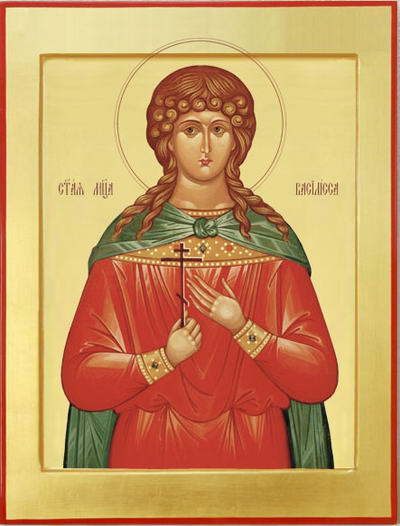 A nine-year-old girl, she suffered in Nicomedia not long after the death of Anthimus. The torturers covered her whole body with wounds, but she remained faithful to Christ. God preserved her unharmed in fire and before wild beasts. Her torturer, Alexander, seeing these wonders, repented and became a Christian. Vasilissa went out into a field, fell on her knees and prayed to God, thanking Him for her endurance under torture, and, while thus praying, gave her soul into God"s hands. This was in the year 309. A nine-year-old girl, she suffered in Nicomedia not long after the death of Anthimus. The torturers covered her whole body with wounds, but she remained faithful to Christ. God preserved her unharmed in fire and before wild beasts. Her torturer, Alexander, seeing these wonders, repented and became a Christian. Vasilissa went out into a field, fell on her knees and prayed to God, thanking Him for her endurance under torture, and, while thus praying, gave her soul into God"s hands. This was in the year 309.St Joannicius, Archbishop and First Patriarch of Serbia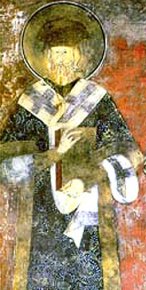 Born in Prizren, he served at first as secretary to King Dusan. He became Archbishop in 1339, and in 1346 was raised to the rank of Patriarch. He was a zealous pastor, and brought order to the Serbian Church, being "a great upholder of the Church"s laws". He entered into rest on September 3rd, 1349, and his relics are preserved at Pec. Born in Prizren, he served at first as secretary to King Dusan. He became Archbishop in 1339, and in 1346 was raised to the rank of Patriarch. He was a zealous pastor, and brought order to the Serbian Church, being "a great upholder of the Church"s laws". He entered into rest on September 3rd, 1349, and his relics are preserved at Pec.Our Holy Father Theoctistus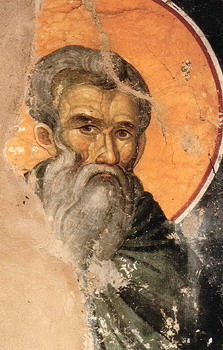 A faster and fellow-ascetic of St Euthymius the Great, Theoctistus was abbot of Euthymius's monastery six miles from Jerusalem, on the road to Jericho. He was in all things a disciple of Euthymius, governing the monastery under his guidance to the age of ninety. He led a godly life, and entered into rest in the middle of the fifth century, in the time of Patriarch Anastasius of Jerusalem. A faster and fellow-ascetic of St Euthymius the Great, Theoctistus was abbot of Euthymius's monastery six miles from Jerusalem, on the road to Jericho. He was in all things a disciple of Euthymius, governing the monastery under his guidance to the age of ninety. He led a godly life, and entered into rest in the middle of the fifth century, in the time of Patriarch Anastasius of Jerusalem.St. Phoebe, deaconess at Cenchreae near Corinth (1st c.)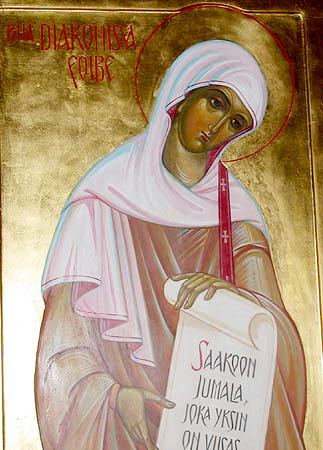 Saint Phoebe the Deaconess is mentioned by the holy Apostle Paul in his Epistle to the Romans (Rom. 16: 1-2). Saint Phoebe the Deaconess is mentioned by the holy Apostle Paul in his Epistle to the Romans (Rom. 16: 1-2).Hieromartyr Aristion, bishop of Alexandria, in Syria (3rd c.).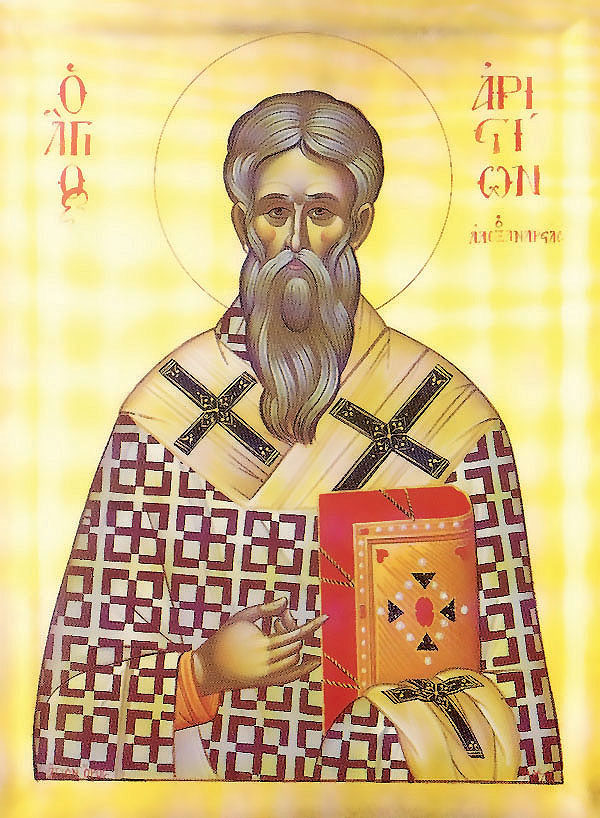 Saint Aristion was the bishop of lesser Alexandria in Cilicia (Asia Minor). He was born in the small town of Aribazo in the eparchy of Apamea, Syria at the beginning of the second century. His parents were pagans, and he spent his early years in an atmosphere of idolatry... Saint Aristion was the bishop of lesser Alexandria in Cilicia (Asia Minor). He was born in the small town of Aribazo in the eparchy of Apamea, Syria at the beginning of the second century. His parents were pagans, and he spent his early years in an atmosphere of idolatry...New Martyr Polydorus of Cyprus (1794)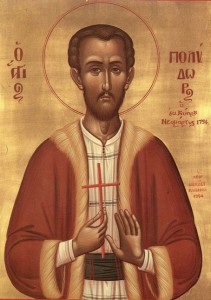 Martyr Polydoros, from the city of Lefkosia on the island of Cyprus. For his conversion from Mohammedism to Christianity, the Turks hanged him after severely torturing him in New Ephesus in 1794. Many miracles were performed from his relics. Martyr Polydoros, from the city of Lefkosia on the island of Cyprus. For his conversion from Mohammedism to Christianity, the Turks hanged him after severely torturing him in New Ephesus in 1794. Many miracles were performed from his relics.Emperor Constantine the New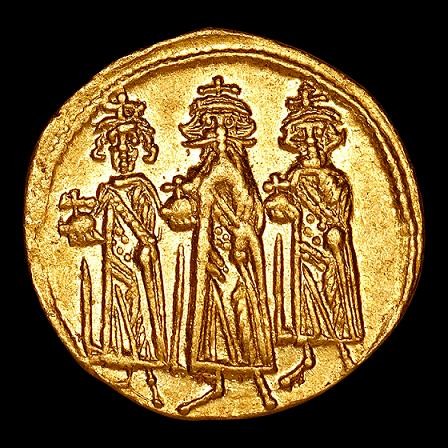 Martyr Zeno of NicomediaSaint Zeno suffered with the hieromartyr Anthimus during the persecution against Christians under the emperors Diocletian (284-305) and Maximian (305-311). The persecution became particularly intense after a fire at the imperial court at Nicomedia. The pagans accused the Christians of setting the fire and reacted against them with terrible ferocity... Martyr CharitonMartyr ArchontinusBlessed John "the Hairy," fool-for-Christ at Rostov (1580)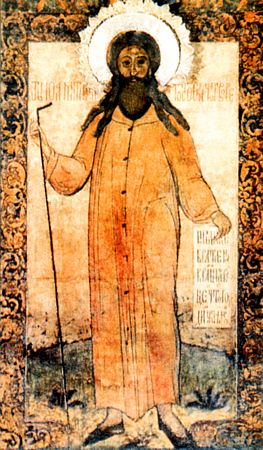 Blessed John the Merciful of Rostov (also known as "Vlasatyi" – "the Hairy") asceticised at Rostov in the exploit of holy folly (iurodstvo), in it enduring deprivation and sorrow. He did not have a permanent shelter and at times took his rest at the house of his spiritual father – a priest at the church of the All-Holy ("Veskhsvyatsk"), or with one of the aged widows. Living in humility, patience and unceasing prayer, he spiritually nourished many a person, in which number was also the Monk Irinarkh, Hermit of Rostov (Comm. 13 January)... Blessed John the Merciful of Rostov (also known as "Vlasatyi" – "the Hairy") asceticised at Rostov in the exploit of holy folly (iurodstvo), in it enduring deprivation and sorrow. He did not have a permanent shelter and at times took his rest at the house of his spiritual father – a priest at the church of the All-Holy ("Veskhsvyatsk"), or with one of the aged widows. Living in humility, patience and unceasing prayer, he spiritually nourished many a person, in which number was also the Monk Irinarkh, Hermit of Rostov (Comm. 13 January)... |
|||||||||||||||||||||||||||||||||||||||||||||||||||||||||||
If You liked our Work and effort then please consider to make a kind donation:

|
|||||||||||||||||||||||||||||||||||||||||||||||||||||||||||||
If you like our project and you are satisfied with our work and effort, please consider making a donation that would help us to survive on the Internet and in further development of the project.
There are many other ways to help...