|
|
Saint Anna, the Mother of the Most Holy Mother of God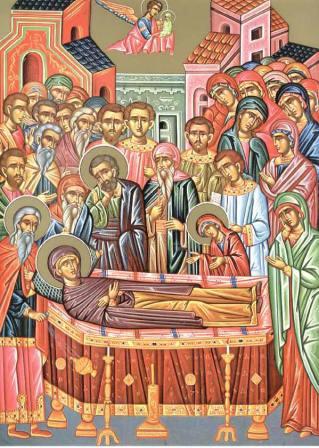 Today is the commemoration of her falling asleep; her main feast is on September 9th, where her life is written. Anna was of the tribe of Levi, and was the daughter of Matthan the priest. After a long life pleasing to God, she entered into rest at a great age. Today is the commemoration of her falling asleep; her main feast is on September 9th, where her life is written. Anna was of the tribe of Levi, and was the daughter of Matthan the priest. After a long life pleasing to God, she entered into rest at a great age.St Olympias the Deaconess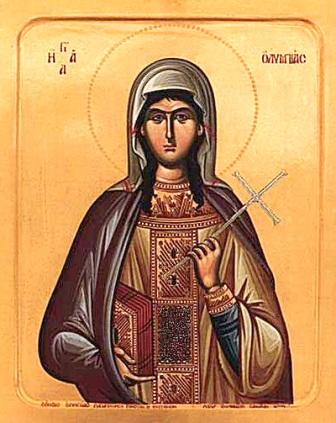 Olympias was born in Constantinople of very eminent parents. Her father, Anysius Secundus, was a senator and her mother was the daughter of the famous aristocrat Eulavius, who is mentioned in the life of St Nicolas the Wonderworker. When Olympias was fully grown, she was betrothed to a nobleman who died before his marriage to this honoured maiden. The Emperor and others exhorted her to take another husband, but in vain; she refused them all and devoted herself to a life pleasing to God, giving of her inherited wealth great gifts to the Church and alms to the poor. She served in the Church as a deaconess, first in the time of Patriarch Nectarius and, after his death, under St John Chrysostom. When Chrysostom went into exile, he advised Olympias to remain in the Church as before and serve it, whichever Patriarch should succeed him. But, immediately after the exile of this great hierarch, someone set fire to a large church, and the conflagration took hold of many of the public buildings in the capital. Chrysostom"s enemies accused this holy woman of being a malicious fire-raiser. Olympias was exiled from Constantinople to Nicomedia, where she entered into rest in 408, leaving instructions that her body be placed in a coffin and cast into the sea, and that she be buried wherever the waves threw the coffin up. The coffin was cast up at a place called Vrochthoi, where there was a church dedicated to the Apostle Thomas. Great miracles of healing have been performed through the centuries by her relics. The exiled Chrysostom wrote beautiful letters to the exiled Olympias, which to this day serve to give support to all who suffer for God"s justice. Among other things, Chrysostom wrote to Olympias: "Now I am deeply joyful, not only because you have been delivered from sickness, but even more because you are bearing adversities with such fortitude, calling them trifles - a characteristic of a soul filled with power and abounding in the rich fruits of courage. You are not only enduring misfortune with fortitude, but are making light of it in a seemingly effortless way, rejoicing and triumphing over it - this is a proof of the greatest wisdom" (Letter 6 of the seventeen that have come down to us) - Olympias was born in Constantinople of very eminent parents. Her father, Anysius Secundus, was a senator and her mother was the daughter of the famous aristocrat Eulavius, who is mentioned in the life of St Nicolas the Wonderworker. When Olympias was fully grown, she was betrothed to a nobleman who died before his marriage to this honoured maiden. The Emperor and others exhorted her to take another husband, but in vain; she refused them all and devoted herself to a life pleasing to God, giving of her inherited wealth great gifts to the Church and alms to the poor. She served in the Church as a deaconess, first in the time of Patriarch Nectarius and, after his death, under St John Chrysostom. When Chrysostom went into exile, he advised Olympias to remain in the Church as before and serve it, whichever Patriarch should succeed him. But, immediately after the exile of this great hierarch, someone set fire to a large church, and the conflagration took hold of many of the public buildings in the capital. Chrysostom"s enemies accused this holy woman of being a malicious fire-raiser. Olympias was exiled from Constantinople to Nicomedia, where she entered into rest in 408, leaving instructions that her body be placed in a coffin and cast into the sea, and that she be buried wherever the waves threw the coffin up. The coffin was cast up at a place called Vrochthoi, where there was a church dedicated to the Apostle Thomas. Great miracles of healing have been performed through the centuries by her relics. The exiled Chrysostom wrote beautiful letters to the exiled Olympias, which to this day serve to give support to all who suffer for God"s justice. Among other things, Chrysostom wrote to Olympias: "Now I am deeply joyful, not only because you have been delivered from sickness, but even more because you are bearing adversities with such fortitude, calling them trifles - a characteristic of a soul filled with power and abounding in the rich fruits of courage. You are not only enduring misfortune with fortitude, but are making light of it in a seemingly effortless way, rejoicing and triumphing over it - this is a proof of the greatest wisdom" (Letter 6 of the seventeen that have come down to us) -Our Holy Mother Eupraxia the Virgin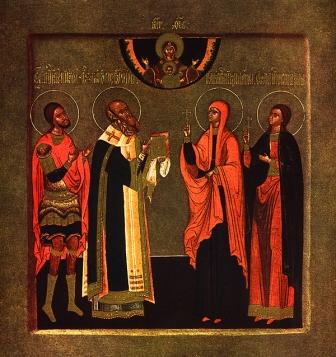 She was the daughter of a Constantinopolitan nobleman, Antigonus, and a kinswoman of the Emperor Theodosius the Great. With her mother, a young widow, she went to Egypt and travelled around the monasteries, giving alms and praying to God. The seven-year-old Eupraxia, in fulfilment of her burning desire, received the monastic habit in a women"s monastery. As she grew older, she took on herself harsher and harsher asceticism, once fasting for forty days. She entered into rest in the year 413, at the age of thirty. She had great grace from God to heal the gravest sicknesses. She was the daughter of a Constantinopolitan nobleman, Antigonus, and a kinswoman of the Emperor Theodosius the Great. With her mother, a young widow, she went to Egypt and travelled around the monasteries, giving alms and praying to God. The seven-year-old Eupraxia, in fulfilment of her burning desire, received the monastic habit in a women"s monastery. As she grew older, she took on herself harsher and harsher asceticism, once fasting for forty days. She entered into rest in the year 413, at the age of thirty. She had great grace from God to heal the gravest sicknesses.Commemoration of the Fifth Ecumenical Council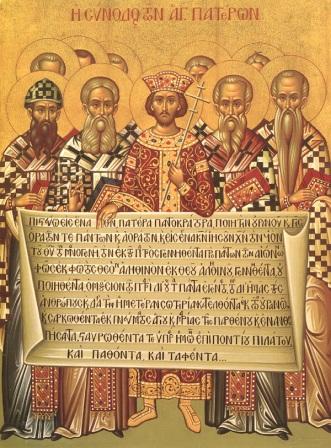 This Council was held in Constantinople in the time of the Emperor Justinian the Great, in 553. All the Monophysite heresies were condemned at this Council, and also the heretical writings of Theodore of Mopsuestia, Theodoret of Cyrus and Origen (his writings against the resurrection of the dead). This Council was held in Constantinople in the time of the Emperor Justinian the Great, in 553. All the Monophysite heresies were condemned at this Council, and also the heretical writings of Theodore of Mopsuestia, Theodoret of Cyrus and Origen (his writings against the resurrection of the dead).Venerable Macarius, abbot of Zheltovod and Unzha (1444)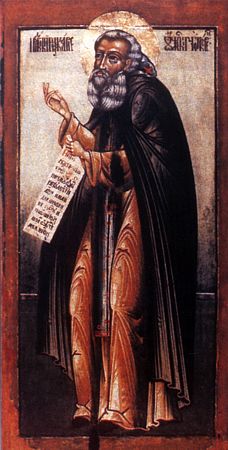 The Monk Makarii of Zheltovodsk and Unzhensk was born in the year 1349 at Nizhni-Novgorod into a pious family. At twelve years of age he secretly left his parents and accepted monastic tonsure at the Nizhegorodsk Pechersk monastery under Saint Dionysii (afterwards Archbishop of Suzdal'; + 1385, Comm. 26 June). With all the intensity of his youthful soul he gave himself over to the work of salvation: extremely strict fasting and exact fulfilling of the monastic rule distinguished him amongst the brethren... The Monk Makarii of Zheltovodsk and Unzhensk was born in the year 1349 at Nizhni-Novgorod into a pious family. At twelve years of age he secretly left his parents and accepted monastic tonsure at the Nizhegorodsk Pechersk monastery under Saint Dionysii (afterwards Archbishop of Suzdal'; + 1385, Comm. 26 June). With all the intensity of his youthful soul he gave himself over to the work of salvation: extremely strict fasting and exact fulfilling of the monastic rule distinguished him amongst the brethren...Martyrs Sanctus, Maturus, Attalus, Blandina, Vivlia, Vetius, Epagathus, Ponticus, Alexander and others at Lyons (177)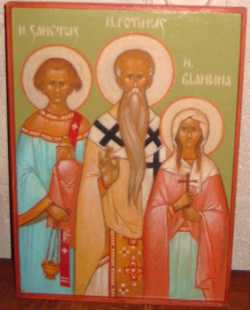 The Holy Martyrs Sactus (Sanctus), Maturus, Attalus, Blandina, Biblius (Viblius), Vittius, Epagathus, Pontinus, Alexander and 43 Others were tortured by the pagans for their belief in Christ in the city of Lyons (then named Lugdunum) under the emperor Marcus Aurelius (161-180), in the year 177. After a vicious death, their bodies were burned, and the ashes thrown into the River Rhone. The Holy Martyrs Sactus (Sanctus), Maturus, Attalus, Blandina, Biblius (Viblius), Vittius, Epagathus, Pontinus, Alexander and 43 Others were tortured by the pagans for their belief in Christ in the city of Lyons (then named Lugdunum) under the emperor Marcus Aurelius (161-180), in the year 177. After a vicious death, their bodies were burned, and the ashes thrown into the River Rhone.Venerable Christopher, abbot of Solvychegodsk (Vologda) (1572)The Monk Christopher of Sol'vychegodsk and Koryazhemsk was a student and novice under the Monk Longin, hegumen of the Koryazhemsk monastery. After the death of his teacher, the Monk Christopher dwelt for yet another ten years at the Koryazhemsk monastery, and then he settled along the upper tributaries of the Large Koryazhemka, where he lived in solitude... New Hieromartyrs Vukosav Milanovic and Rodoljub Samardzic of Kulen Bakufa, Serbia (1941-1945)Protopresbyter Vukosav Milanovich was born in the village of Savai near Bosnisky Petrovec. He finished seminary in Relievo and was ordained priest in 1892. Fr Vukosav was captured by the Ustashi, who murdered his children and savagely tortured him. He died from his injuries after torture in Lica.
Priest Rodoliub Samardzhich was born in Rogatice in 1907. He finished seminary in Sarajevo and was ordained deacon and then priest in 1931. He was murdered by the Ustashi in June 1941.
|
|||||||||||||||||||||||||||||||||||||||||||||||||
If You liked our Work and effort then please consider to make a kind donation:
 |
|||||||||||||||||||||||||||||||||||||||||||||||||||
If you like our project and you are satisfied with our work and effort, please consider making a donation that would help us to survive on the Internet and in further development of the project.
There are many other ways to help...